
Columbia Planning Commission Pushes Zoning Overhaul Forward with New State Support
March 17 may have been St. Patrick’s Day, but Columbia’s luck came in the form of momentum.
At 7 p.m. sharp, the Columbia Borough Planning Commission opened its meeting with tradition—a moment of silence and the Pledge of Allegiance—before getting straight to work on decisions that will shape the borough for decades to come.
After quickly approving routine items, including February’s meeting minutes, the Commission shifted its focus to a topic that’s been simmering in Columbia for years: a complete modernization of the borough’s zoning rules.
State Assistance Helps Restart a Long-Awaited Project
A highlight of the evening was a follow‑up discussion with representatives from the Pennsylvania Department of Community and Economic Development (DCED). Through a state technical assistance program, Columbia now has access to nearly 400 hours of professional planning support, specifically aimed at advancing key recommendations from the Columbia 2040 Comprehensive Plan.
For the Commission, the help couldn’t come at a better time.
Columbia began a zoning update in 2019, but between staff turnover and the challenges of the pandemic, the effort stalled. Now, with the state stepping in, the borough finally has the resources to push the project across the finish line.
What Will Change? Top Priorities Take Shape
The Commission spent much of the meeting deciding how to best use the limited hours of state assistance. Their priorities include:
1. Simplifying the Zoning Map
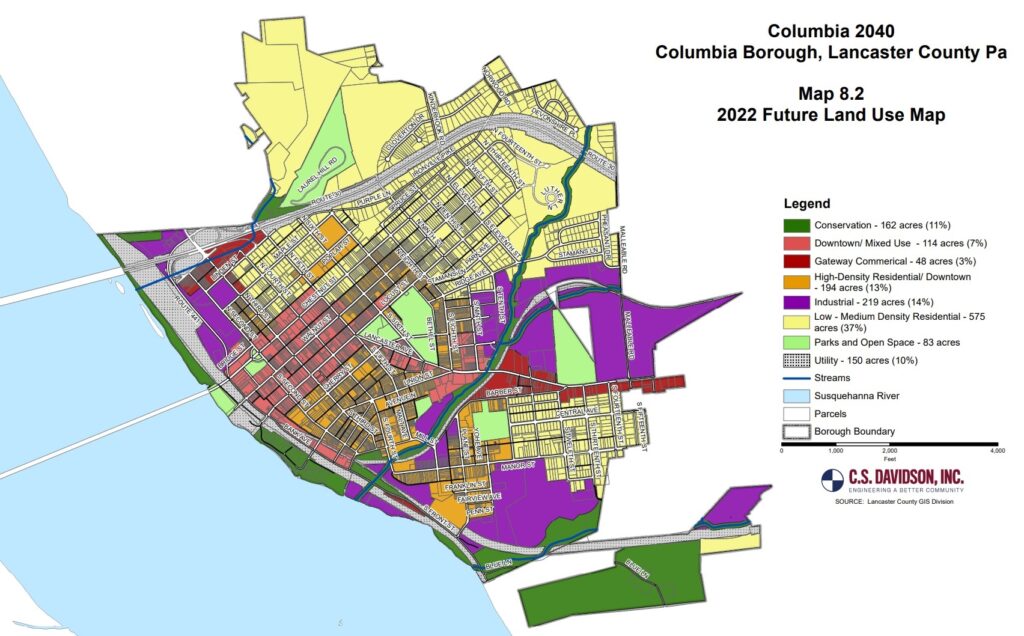
Columbia currently has 17 different zoning districts—a number the Commission hopes to significantly reduce. Earlier drafts suggested consolidating them into just seven.
2. Aligning Regulations with the Future Land Use Map
The borough’s plans and its zoning rules don’t always match. Fixing that mismatch is a major goal.
3. Updating Outdated Definitions
From modern warehouses to data centers to new types of businesses, Columbia’s zoning ordinance needs fresh terminology that reflects today’s economy.
4. Making the Ordinance Easier to Understand
Residents and business owners often find the zoning rules confusing. Simplifying language and structure is a top priority.
5. Considering Overlay Districts
These special zones could help reduce the number of districts while preserving flexibility where it matters most.
One topic that always looms large in Columbia—parking—was intentionally set aside for now. Borough Council is already tackling potential changes to parking requirements, especially for rental properties, so the Commission will focus its energy elsewhere during this phase.
What Happens Next?
DCED’s planning process is expected to run for about six months. During that time, the state team will meet with both the Planning Commission and Borough Council to develop:
- Recommendations
- Draft concepts
- A detailed roadmap for updating the zoning ordinance
This effort will not rewrite the entire zoning code, but it will outline exactly how to do so—and help ensure Columbia’s regulations align with its vision for the future.
Any final zoning changes will still require full review, drafting, and approval by Borough Council.
Official Action Taken
To keep the project moving, the Planning Commission voted unanimously to recommend approval of the revised scope of work, sending it on to Borough Council for the next step.
Other Local Updates from the Meeting
- Several ordinances—covering rental rules, food trucks, and fire inspections—are currently under review by Borough Council.
- A modification to a development project on South 9th Street was approved, allowing a fee‑in‑lieu in place of a planned ADA ramp due to space challenges.
- The next Planning Commission meeting is scheduled for April 21.
A Pivotal Moment for Columbia
As Columbia continues to grow while honoring its historic character, this zoning overhaul represents one of the most important steps the borough can take. With state support and renewed momentum, the community is moving closer to a clearer, more modern framework for responsible development.