






Public Trust Is Earned in the Open: What Columbia Borough Owes Its Residents
Editorial | ColumbiaPA.online
Bottom line: When residents ask direct questions about government business, they deserve direct, accurate answers the first time. The last two weeks show why public trust in Columbia Borough’s leadership is wobbling.
Two Stories, One Problem: Transparency
In back‑to‑back reports, Columbia Spy surfaced two issues that go to the heart of public trust.
- An internal-misconduct rumor was officially labeled “unfounded.”
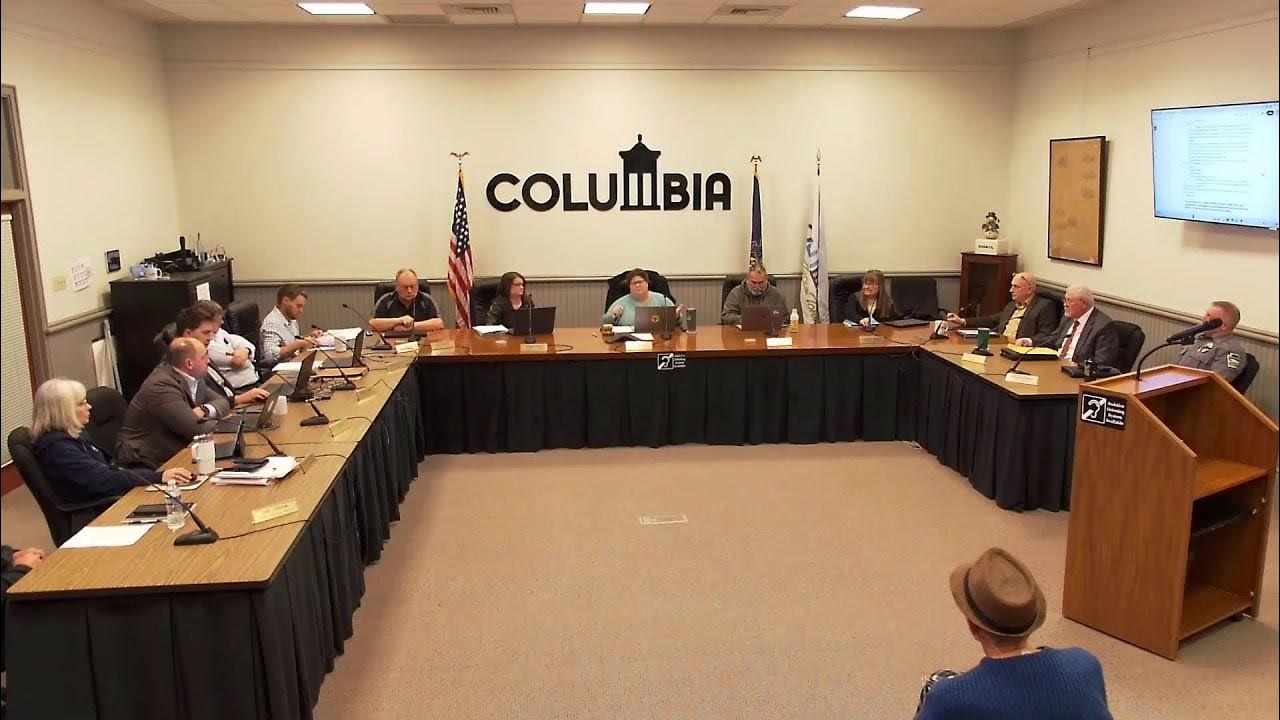
At the March 10, 2026 meeting, Borough Solicitor Evan Gabel read a prepared statement about long‑circulating claims involving a former employee and an elected official. Gabel said he led a review—coordinating with the police department—and concluded the allegations were unfounded, adding that no civil or criminal complaint had been filed and that the Borough considers the matter closed. - A formal police‑coverage proposal existed—after officials downplayed or denied it.
In January, a resident asked council whether Columbia Borough Police Department had given Wrightsville Borough a written proposal for police services in 2026. Multiple officials responded that they were unaware, that it was just talk, or that “nothing official” existed. A Right‑to‑Know request to Wrightsville later produced a document on Columbia Borough Police letterhead, dated April 15, 2025, laying out staffing, scope, and an itemized $875,174.32 annual cost based on per‑capita math. The proposal was discussed publicly at a Nov. 3, 2025 Wrightsville meeting. In February, Columbia’s police chief acknowledged he had “submitted the numbers,” while emphasizing not all councilors knew about the initial proposal. Wrightsville ultimately contracted with Hellam Township Police.
Columbia Spy’s reporting—anchored in public‑meeting footage, statements, and documents—did the public a service: it replaced confusion with primary‑source facts.
Why the Mixed Messages Matter
Consistency is credibility. When elected officials and senior staff deliver conflicting descriptions of the same thing—especially on basic, documentable questions—residents are left to wonder: What else don’t we know? The two episodes above are very different in content (a personnel rumor versus a service proposal), yet they share a common thread: the public had to work to get clear answers. In one case, an investigation summary arrived long after rumors spread; in the other, a resident had to file a records request with another municipality to confirm that a written proposal existed.
Even if each denial or minimization had a benign explanation—misremembered timelines, internal briefings that didn’t reach every councilor, or a belief that discussions were “preliminary”—the effect is the same: confidence erodes when the first answer doesn’t match the final record.
The Email vs. The Microphone
Residents also flagged a communication gap between written responses and what was said at meetings—including a letter that reportedly contradicted what residents were told at the microphone. That inconsistency is more than a PR issue; it’s a governance issue. When the paper trail and the public record diverge, residents are justified in asking: Who is accountable for the official version of events? Columbia Spy captured that gap—and the frustration it creates—by documenting the resident’s January question, the February follow‑up, and the March acknowledgment.
Public Trust 101: What Good Looks Like
Here is what restores trust quickly:
- Say what exists, when it exists.
If a draft, memo, proposal, or email has been sent outside the building—even preliminarily—say so plainly, and identify who authorized it. This is especially important for inter‑municipal proposals with price tags and staffing implications. - Own the process in public.
If only some councilors were briefed, say that—and fix it. Establish a standard that all councilors receive the same materials at the same time for external proposals. Publish a one‑page “What’s Been Sent” log on the Borough website. (It can be updated monthly and attached to meeting packets.) - Close the rumor loop with documentation.
The solicitor’s statement on the misconduct claims was necessary, but the Borough should go one step further: post a plain‑language summary of what was reviewed (with privacy‑compliant detail) so residents understand the basis for “unfounded.” Even a two‑paragraph FAQ preserves privacy while showing the work. - Match the mic to the memo.
Before answers are given at the podium, align them with any letters or emails already sent to residents. If a new fact emerges later, correct the record at the next meeting and on the website—clearly, not grudgingly. - Adopt a 48‑Hour Clarification Rule.
When a meeting answer is later found incomplete or inaccurate, publish a correction within two business days in the meeting recap and newsroom sections of the Borough site, and send it to the listserv. This prevents “telephone game” confusion from hardening into distrust.
The Question Columbia Keeps Asking
Why is it so hard to get transparency from this council and staff? Residents have now watched a rumor handled late and a police‑coverage proposal acknowledged only after a third‑party records request. Those are not fatal mistakes—but they are preventable mistakes. Columbia Spy did what a local watchdog should do: verify, document, and publish. The next move belongs to the Borough: embrace more sunlight than the law requires.
If Columbia wants to stop the cycle of rumor, denial, and RTK, the fix isn’t complicated:
- Post what’s sent.
- Brief every councilor.
- Correct quickly.
- Treat residents like partners, not petitioners.
Do that—and public trust will follow.
Sources
- Columbia Spy: “Columbia Borough solicitor calls employee misconduct rumors ‘Unfounded’ after internal investigation” (Mar. 12, 2026). [columbiaspy.com]
- Columbia Spy: “Why did Columbia Borough officials downplay a formal police proposal to cover Wrightsville?” (Mar. 11, 2026). [columbiaspy.com]