








“The Bid Was Stopped — But the Fight Has Just Begun”
Columbia—you did something rare.
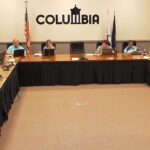
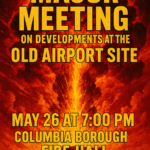
You showed up. Hundreds packed the fire hall. People lined the walls. Some were turned away. For the first time in a long time, this town made it clear: We are paying attention now.
And it worked. Borough Council rejected a $6.35 million bid for the former McGinness Airport property A deal many feared could lead to a data center for now is off the table
But let’s not fool ourselves. This isn’t over. The Reality: It’s Coming Back The borough now has to: Re-advertise the property Re-open the bidding process Accept new proposals
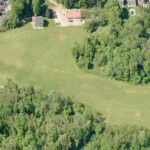
And history tells us exactly what happens next: The same developer or another one comes back with a cleaner contract, better paperwork, Fewer technical flaws, And suddenly… The deal goes through. Why? Because the underlying conditions haven’t changed: The site is still 41 acres of pad-ready industrial land The zoning still allows data-center-type uses Millions have already been spent making the site buildable That’s not speculation. That’s momentum. Sealed Bids: The System We’re Fighting in Yes, the process feels frustrating. The borough used a sealed bid process Details weren’t fully public ahead of time Residents felt blindsided but here’s the truth: Sealed bids are legal and common for municipal land sales The problem isn’t the process itself. The problem is that once bids come in, the borough is under pressure: To recover its investment To generate tax revenue To justify spending millions on the site And that pressure will keep pushing toward large-scale development. This Is Bigger Than One Project This is where the conversation needs to change. Because this isn’t just: “Do we want a data center?” This is: What kind of town is Columbia going to be? Columbia Is A River Town — Not An Industrial Data Zone Let’s remind ourselves what Columbia actually is:
A Susquehanna riverfront community A destination that attracts: Cyclists, Hikers, Tourists, Local businesses, Thousands come here every year not for warehouses, not for server farms—but for: The river, The views, The character That identity has value. Economic value. Community value. And it’s completely incompatible with: massive industrial structures heavy Infrastructure demands constant operational noise
The Hard Truth: The Borough Set This in Motion We have to say it clearly. The borough bought the airport site in 2021 for redevelopment. They invested millions into cleanup and preparation They updated zoning to allow modern industrial uses, including data centers That created the conditions we’re facing now. But that doesn’t mean it can’t be redirected. How We Actually Fight This (Starting Now)?
This next phase is where communities either win—or lose.
Here’s the real playbook.
1. Control The Narrative Immediately You cannot let this be framed as: “Economic growth vs. anti-development residents” You need to define it as: Smart riverfront development vs. incompatible industrial use Push alternatives: tourism-focused development, mixed-use riverfront, recreation, small business expansion.
2. Force A Zoning Correction. This is critical. If data centers remain developers will keep coming! Demand removal of data centers as “by-right” uses OR Require special exception approval that forces: public hearings expert testimony community input.
3. Show Up BEFORE the Next Bid This is where Columbia got burned before. Do NOT wait until: a contract is announced a vote is scheduled You need turnout at: planning commission meetings zoning discussions workshop sessions That’s where decisions are shaped—not finalized.
4. Demand Bid Criteria That Reflect Community Priorities The borough controls the RFP (Request for Proposals). That’s your leverage. Push requirements like: noise limits, environmental safeguards community-use components, compatibility with riverfront character. Make data centers unattractive or unworkable.
5. Keep Pressure On Council Consistently The recent vote proves something important: Council WILL respond to pressure but only if it continues. Not one meeting. Not one petition. Sustained, organized, visible pressure. A Message About Leadership; There’s going to be noise. Different voices. Strong opinions. Emotions running high. Keep this grounded in one thing: The future identity of Columbia Not personalities. Not factions. We stopped one deal. That’s not the victory. That’s the warning shot. Because now: the land is still for sale the zoning still allows it the developers are still watching!
The only question left is: Will Columbia decide what it wants to be—before someone else decides for it?



Consumers and local communities have several powerful legal, political, and consumer-driven options to push back against aggressive data center expansions. As the demand for AI infrastructure strains local power grids, jacks up utility prices, and creates noise pollution, grassroots resistance has successfully delayed or blocked over $64 billion in data center projects.If a community is facing aggressive data center development, citizens can take action through three main avenues.1. Local Zoning, Legal, and Political InterventionsMost data center battles are won or lost at the municipal level. Because data center developers rely on local government approvals for land use and power substations, consumers can exert massive leverage on local officials.Demand a Moratorium: Communities can pressure city councils to pass temporary bans or moratoriums on data center permits. For example, cities like Monterey Park, California, successfully enacted moratoriums and full bans to halt hyperscale development while they evaluate resource impacts.Enact Strict Conditional Use Ordinances: Neighbors can advocate for strict zoning amendments. For example, town planning commissions can pass ordinances that mandate massive physical setbacks from residential areas, strict decibel noise limits for cooling fans, and hard caps on water consumption.File Public Nuisance or Environmental Lawsuits: If a data center violates local noise ordinances or impacts residential health, citizens can file private or public nuisance lawsuits. In places like Prince William County, Virginia, community groups successfully used the court system to halt massive data center complexes by proving the government failed to give proper public notice.Run for the Planning Board: The most direct way to stop predatory land development is to join the municipal boards that vote on the permits.2. Utility Ratepayer ProtectionsWhen a massive data center hooks into the local power grid, it can cause electricity prices to skyrocket for ordinary homeowners. Consumers can fight this through state utility commissions.Challenge Cost-Shifting at Utility Board Meetings: Citizens can formally intervene in state Public Utility Commission (PUC) hearings. Ratepayers can demand that utility providers implement “special tariffs” so that data center developers pay for their own grid upgrades and power substations rather than passing those multi-million dollar costs onto residential utility bills.Lobby Against Government Tax Subsidies: Many states grant huge tax breaks to attract tech giants. Grassroots organizations can pressure state legislators to eliminate these incentives unless the data center meets strict climate goals, invests in on-site green energy, and guarantees it won’t strain local schools or infrastructure funding.3. Organized Consumer Advocacy and National CoalitionsIsolated individuals rarely stop multi-billion-dollar tech companies, but national networks provide free legal playbooks and organizing tools.Partner with National Environmental Groups: Local chapters of organizations like the Sierra Club, Clean Water Action, and the NAACP (via their Stop Dirty Data Centers framework) actively provide resources, templates, and legal backing to frontline communities fighting aggressive infrastructure.Digital Campaigning: Grassroots groups heavily utilize platforms like Facebook and Change.org to track active projects, circulate petitions, and orchestrate massive turnouts at city council voting sessions, catching local boards off guard.