




A brief exchange during the June 23, 2026 Columbia Borough Council meeting drew attention to a broader conversation about representation, recognition, and the role of local government in community messaging.
During the public comment portion of the meeting, a resident addressed council regarding a recently issued Pride Month proclamation, leading to a response from Mayor Leo Lutz and a moment that reflected differing viewpoints within the community.
A Resident Raises Concerns
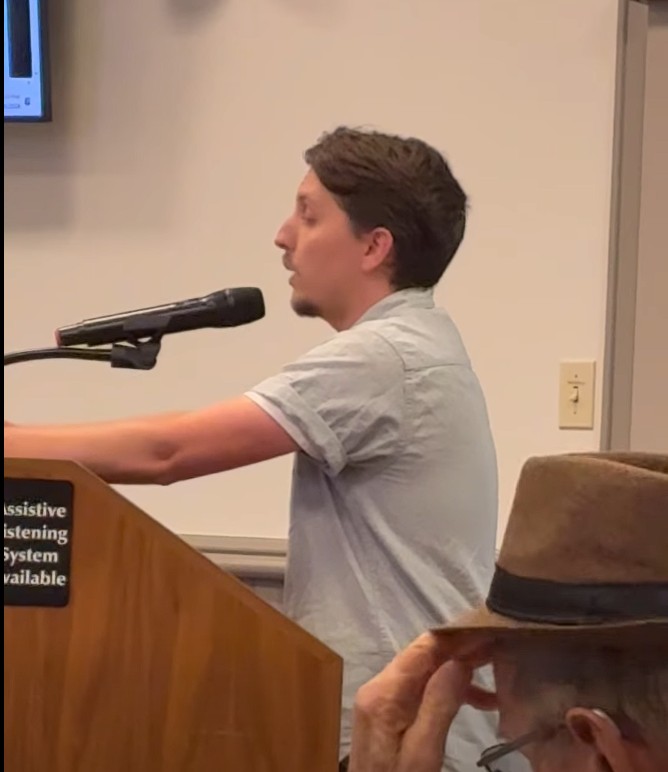
Resident Jesse Ribbonitz spoke during public comment, focusing on the mayor’s earlier proclamation officially recognizing June as Pride Month in Columbia Borough.
In his remarks, Ribbonitz expressed appreciation for the stated goals behind the proclamation—specifically the desire for people to feel safe, valued, and free from bullying. However, he questioned whether publicly recognizing a specific group through a dedicated month was the best approach.
Ribbonitz emphasized that all individuals should be treated equally and argued that highlighting one group through official recognition does not represent the entire community. He stated that, in his view, such proclamations can create division rather than unity.
He concluded his comments by asking the mayor to reconsider and retract the proclamation.
Mayor Leo Explains Decision
Mayor Leo Lutz responded shortly after the comment, offering context for his decision.
He explained that proclamations are commonly issued in response to requests tied to nationally recognized observances, and that Pride Month is one of many such recognitions seen across communities throughout the country.
The mayor noted that his intent in issuing the proclamation was not to elevate one group above others, but to reinforce broader principles, including:
- Equal rights under the law
- Respect for all individuals
- Protection from discrimination and bullying, particularly among young people
While acknowledging that individuals may hold different personal views, the mayor stated that his role includes recognizing established observances and promoting the well-being of all residents. He also made it clear that he does not plan to withdraw the proclamation.
Understanding the Role of Proclamations
The exchange highlighted a point that often doesn’t receive much attention in local government: what proclamations are—and what they are not.
Proclamations are symbolic statements, typically issued by a mayor, that recognize events, causes, or groups. They do not carry legal authority, create policy, or require council approval.
Instead, they serve as a way for a municipality to acknowledge certain issues or moments considered significant at the local, state, or national level.
Reflecting Broader Conversations
While the exchange itself was brief, it reflects a wider discussion happening in communities across the country about:
- How local governments recognize groups and causes
- What it means for a community to feel represented
- Where the line is between inclusion and neutrality
In Columbia, the moment underscored how even symbolic actions can carry weight in a small-town setting, where decisions often feel more personal and visible.
Public Participation in Action
The discussion also serves as an example of how public comment functions in local government.
Residents are given the opportunity to speak directly to elected officials, raise concerns, and express differing viewpoints—even on issues that may not lead to formal council action.
In this case, a resident shared an objection, and the mayor provided a public response, offering transparency into both perspectives.
Moving Forward
No formal action followed the exchange, and the Pride Month proclamation remains in place.
However, the discussion adds to a growing set of conversations within Columbia about how local leadership communicates community values and how residents engage with those decisions.
As the borough continues to navigate a range of topics—from development to public participation—moments like this highlight the role of open dialogue in shaping the direction of the community.
Final Thought
Even when perspectives differ, public meetings remain one of the few places where those viewpoints can be expressed face-to-face.
And in Columbia, those conversations—however brief—are becoming an increasingly visible part of civic life.